ZuZu
Superfan app where indie musicians run paid fan communities

Context
What is ZuZu?
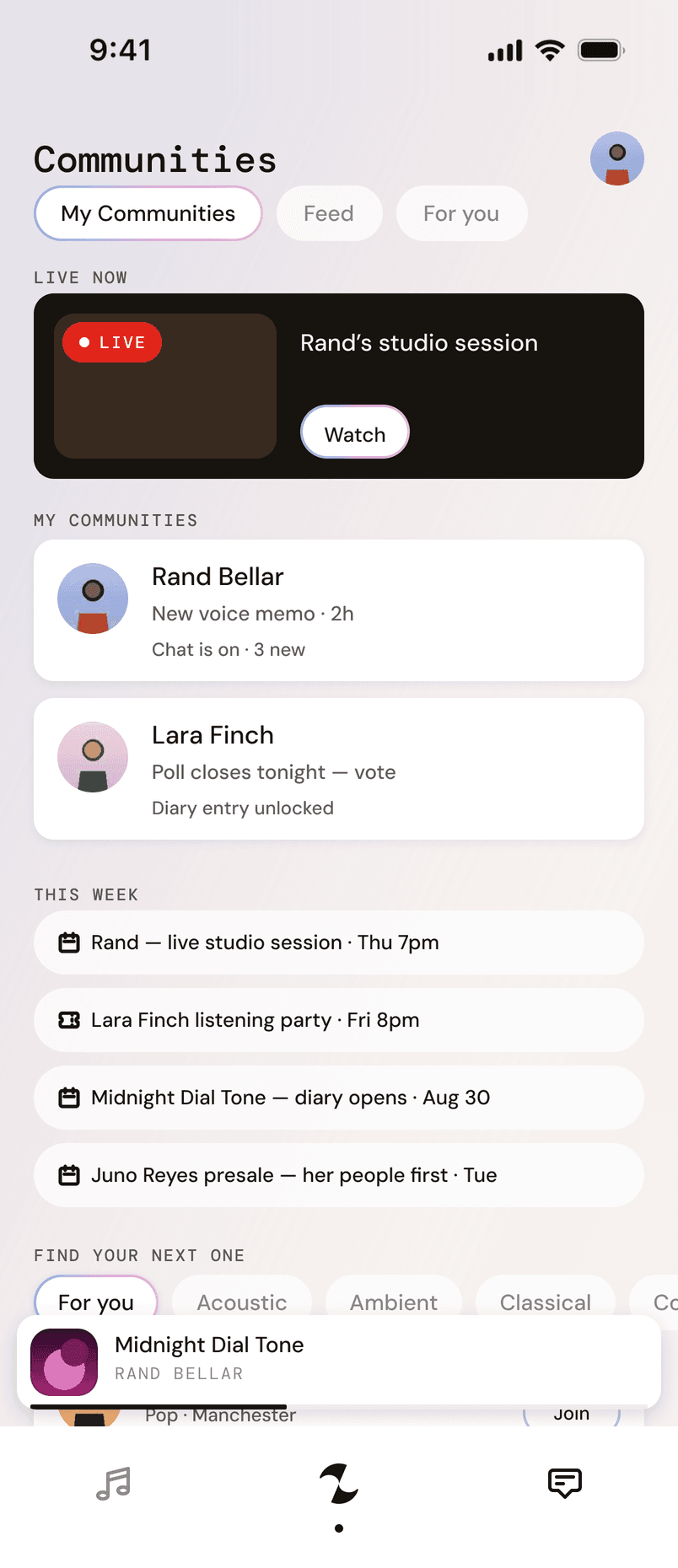
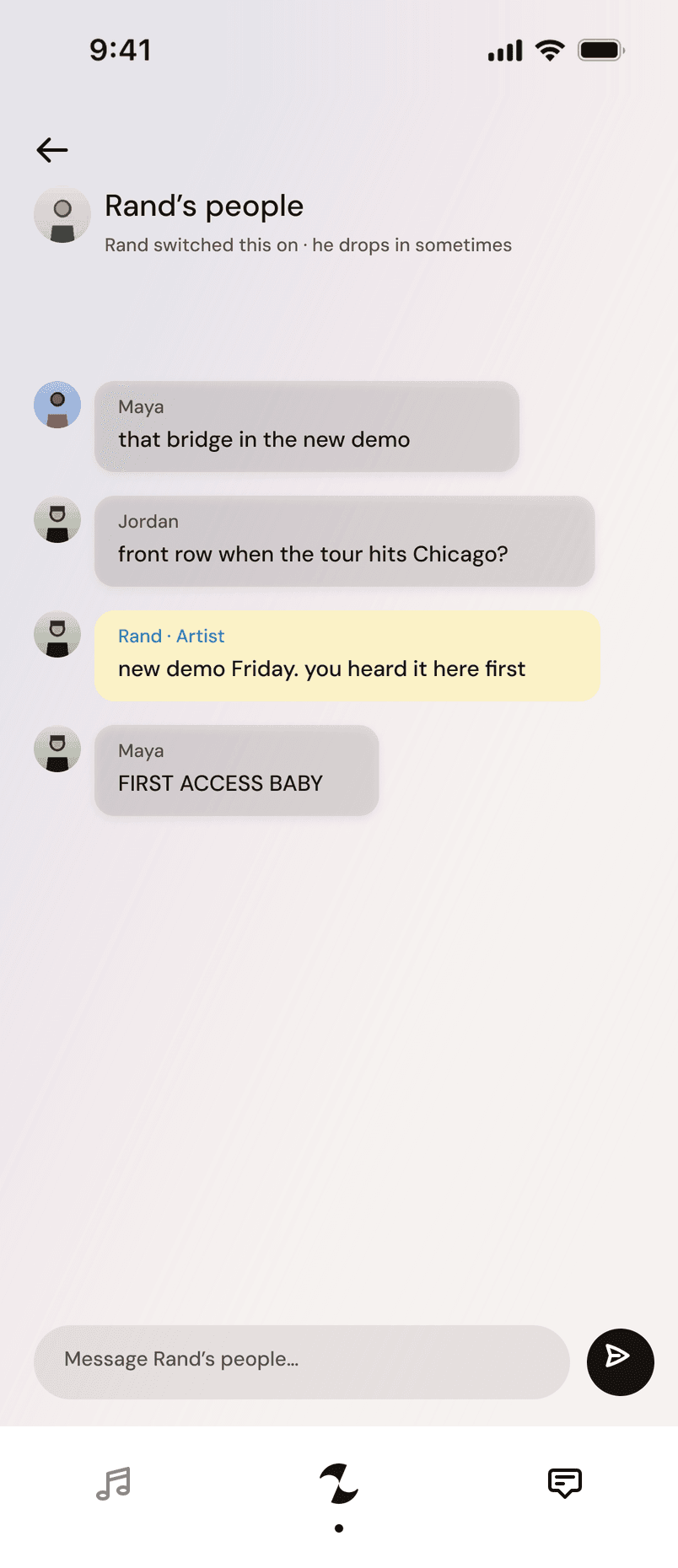
ZuZu is a superfan app where independent musicians run paid fan communities. It has two sides: a fan app and an artist console.
Goal
Give independent artists a music-native space they own, where listeners become a community that funds their career.
My role
I'm a co-founder and the founding Head of Product. I own research, product direction, and design, and I built the MVP as its sole engineer.
Twenty interviews, one MVP
Talking to artists and fans
I synthesized 20+ interviews with artists, fans, and music-industry professionals, and a 6-platform competitive audit.
The artists ranged from pre-release to 700,000 monthly listeners and 100M lifetime streams. At every size, they described the same gap: they can't identify or reach their most engaged fans. One producer called his fanbase “a giant group chat that just hasn't been created yet.”
The tools built to fix that failed because they asked artists for labor they don't have, and asked fans for a transaction they find distasteful.
Words can sink the right product
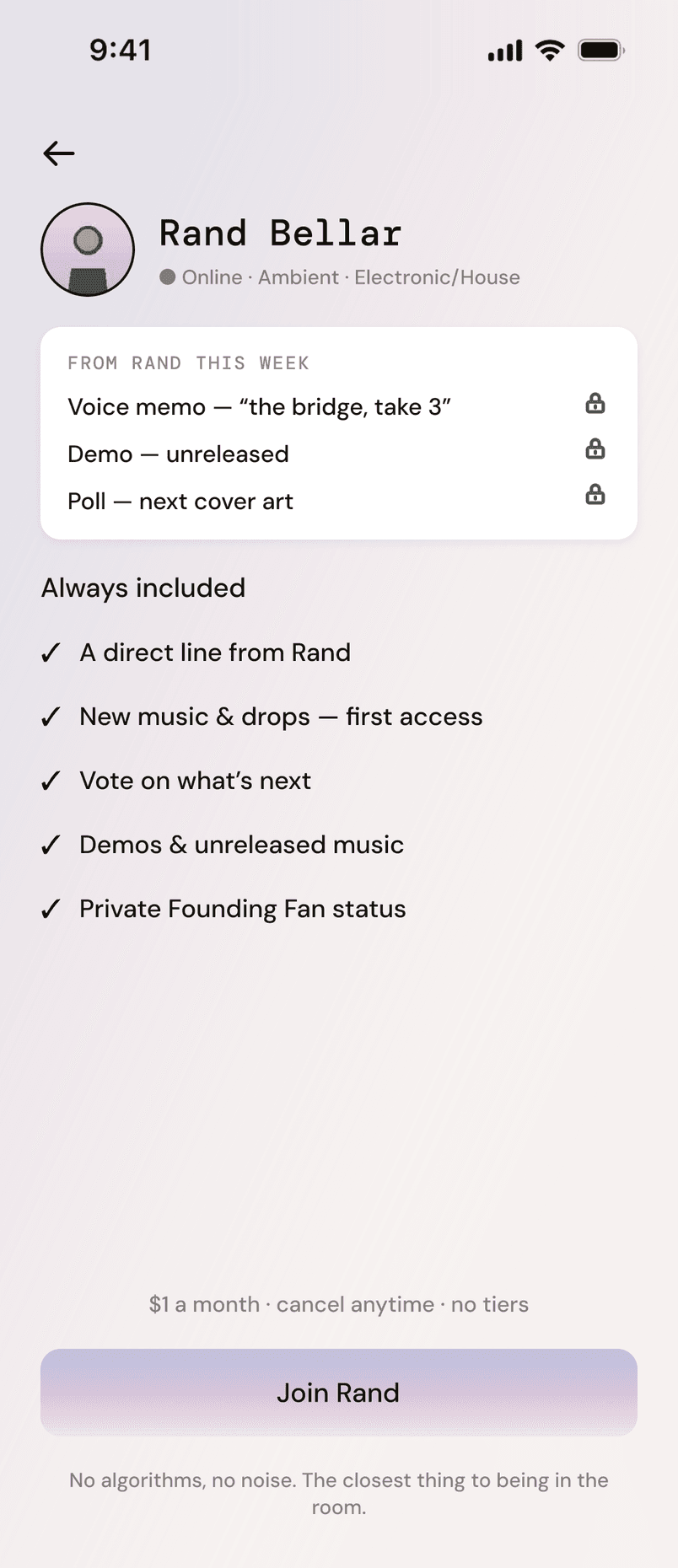
“The word subscription kind of turns me off. It makes it feel like a transaction,” a music-industry professional told me, interviewed as a fan.
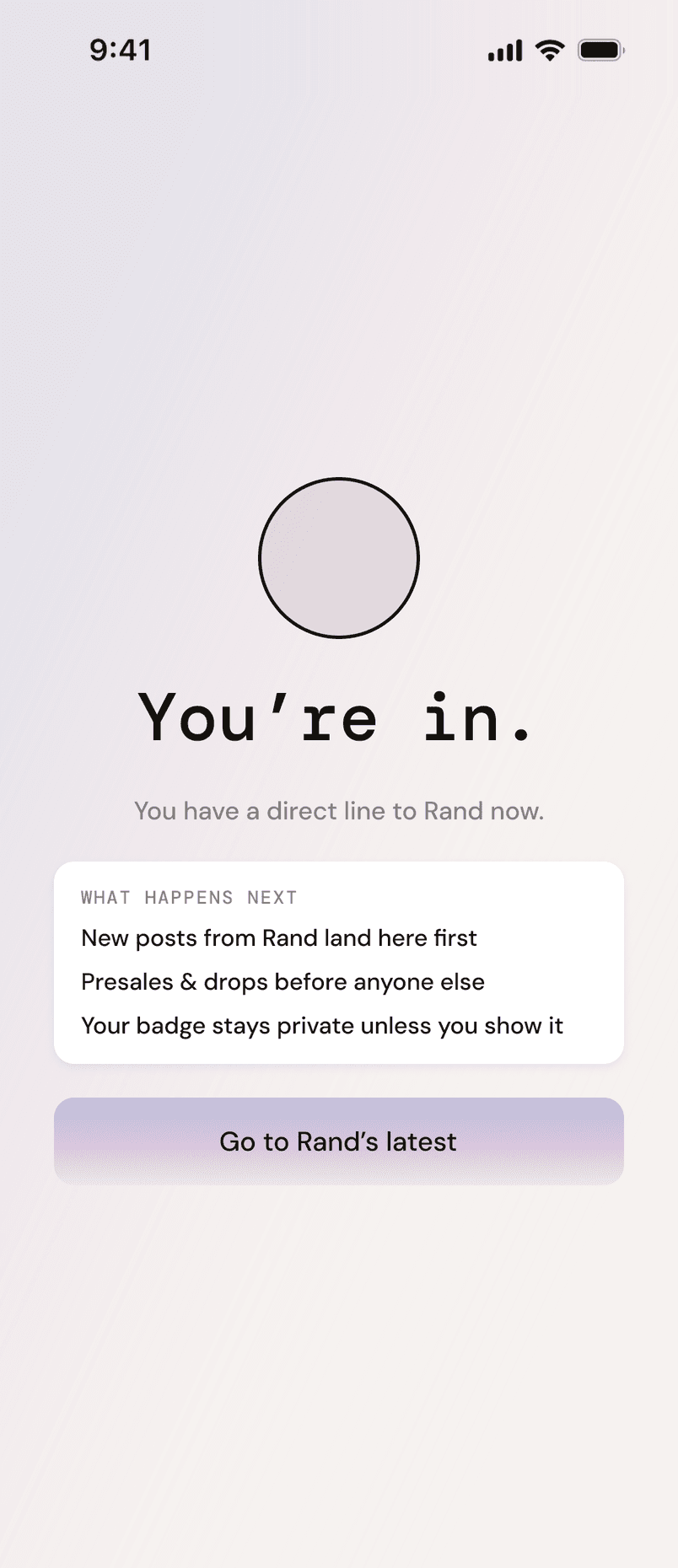
A product can be exactly right and still be rejected for the words used to describe it. So the button just says Join and the artist's name, and the price sits on its own quiet line.
Cutting the scope
For the first build, we deferred livestreaming, ticketing, merch, and a cross-artist discovery feed, and held AI recommendations and Spotify import for later. None of them directly proved the core idea.
We worked to one filter: if a feature doesn't give the artist something they own about their fans, it's out. I defined the MVP feature set against it.
Ninety screens, by hand and with AI
Hand work and AI agents
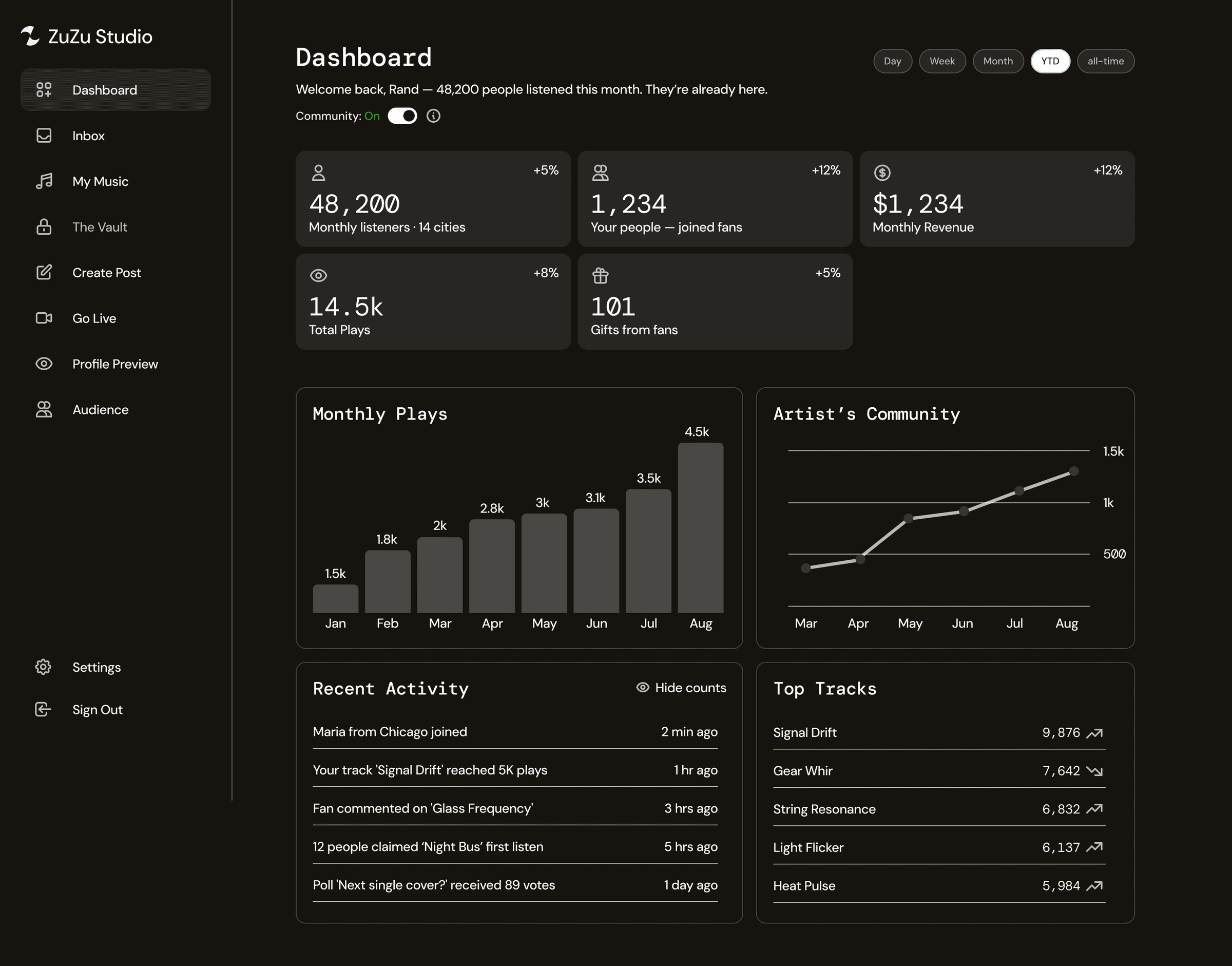
I designed a 60+ screen fan app, a 30+ screen artist console, two clickable prototypes, and a design system. It was a hybrid: I designed by hand in Figma, and directed AI agents inside Figma to work at scale.
Checking their work
The agents' own reports turned out to be unreliable, so I built checks around them: automated link audits, write-then-read-back checks, and render-based visual QA.
Testing changed my mind on AI
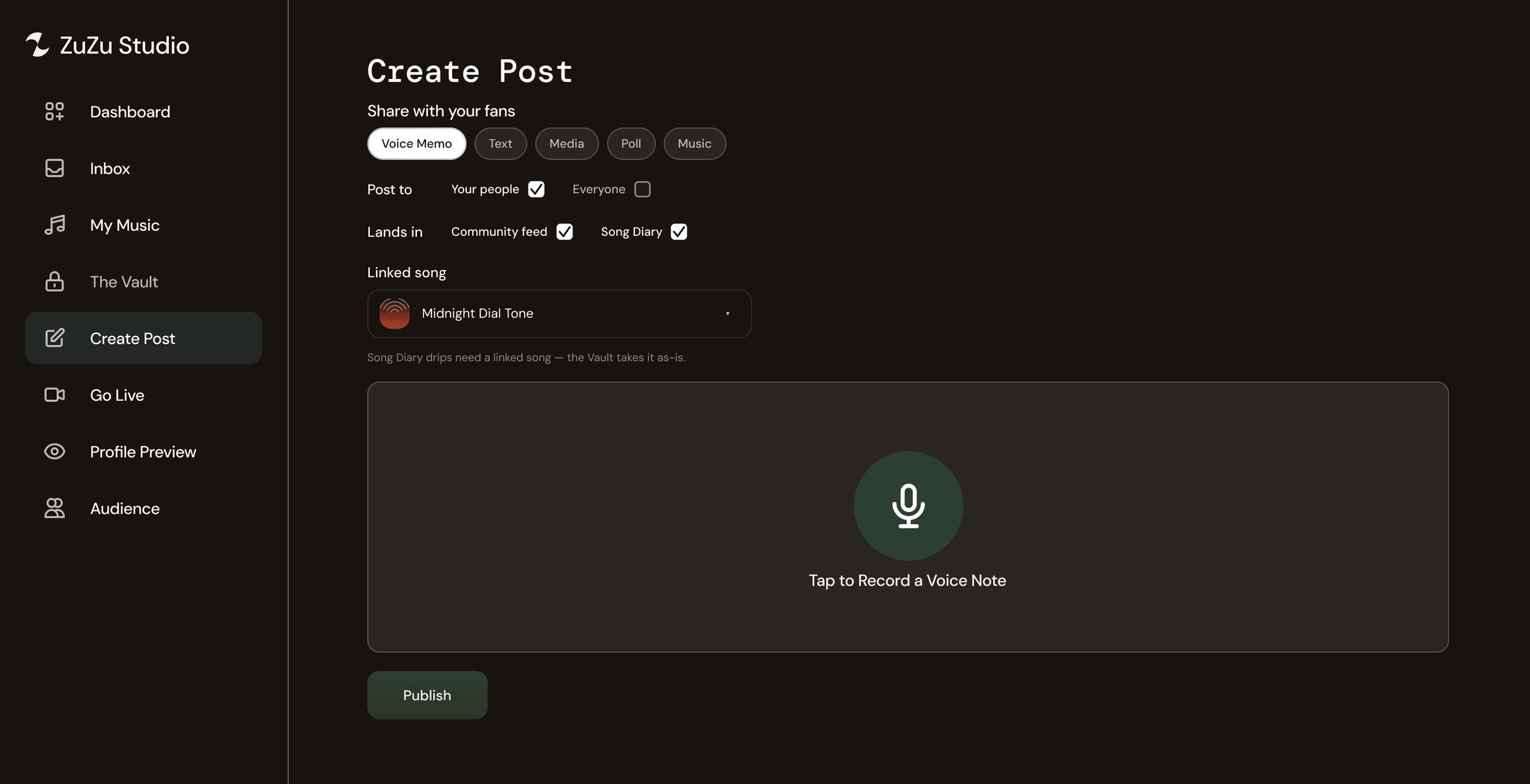
I had planned AI drafting for artist posts. Testing reversed it. “Artists aren't machines,” as one tester put it, so posts stay in the artist's own voice.
Testing also made the feed more minimal, with cards and fewer badges, and hid member and stat counts on fan-facing pages.
Building it alone
The build
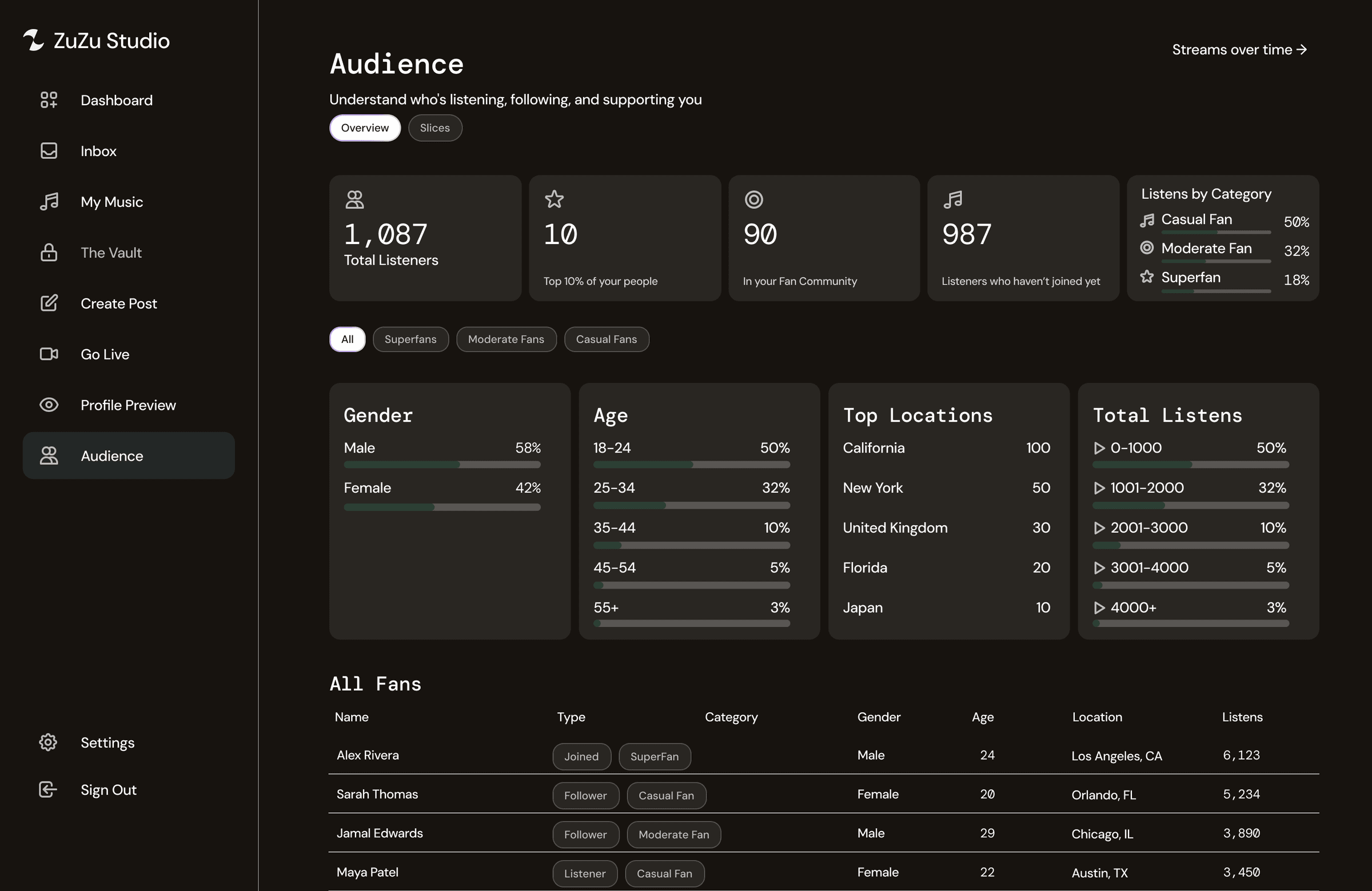
I built the MVP end to end as its sole engineer, with Claude Code and Cursor, on React Native (Expo), Next.js, Supabase, and Stripe.
Outcome and what I'm taking with me
Outcome
- 12+pilot artists
- 4M+combined monthly listeners
- 90+screens designed
- $500Kpre-seed round pitched
ZuZu has 12+ pilot artists with 4M+ combined monthly listeners. I built the deck, and I'm pitching investors for a $500K pre-seed round.
Next: the app in pilot artists' hands, then gifts, presales, merch, and ticketing.
An agent's report is a hypothesis
The file is the evidence, and the person directing the work owns the proof.
The side with the picture wins
The fan story is easier to tell than the artist story. The side you can show wins the first ten seconds.
Scores argue, reviews decide
Scoring ideas against each other is useful, but the scores are an argument. The review is the decision.